Case Study: Digital District
UI/UX design + Product Development
Digital District is a social and financial assistance initiative in the Philippines, designed to provide faster, more transparent, and more accessible support to citizens in need. The platform works with government-backed and private NGOs to streamline the delivery of aid and connect communities with resources efficiently.
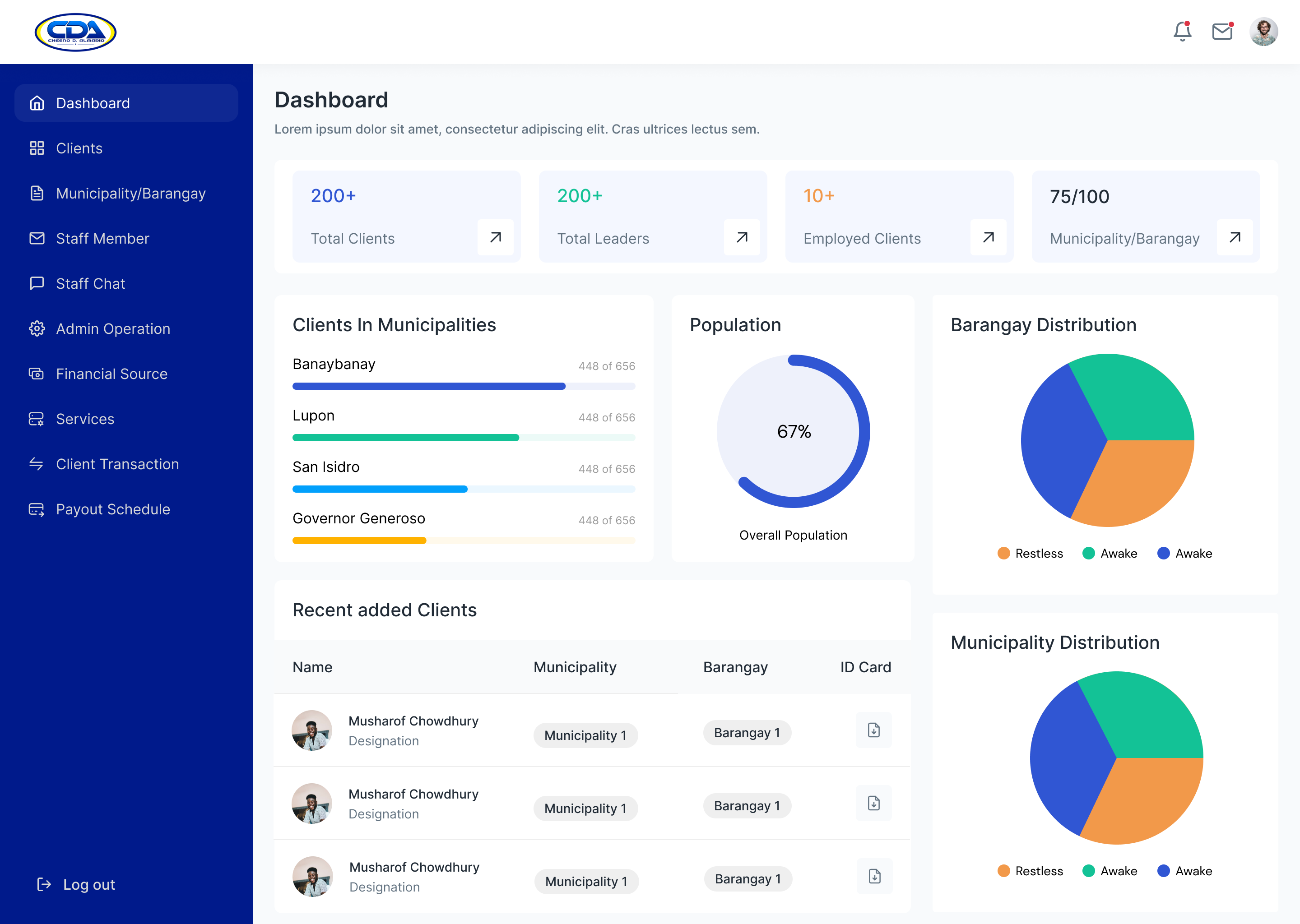
Two-Way Digital Media partnered with Digital District to build and deploy a centralized digital platform that replaced slow, manual workflows with a secure, scalable system for public service delivery.
The Challenge
Before Digital District went digital, assistance programs relied on manual coordination and fragmented systems. This created major issues:
- Slow approval cycles, with decisions taking up to 15 days
- Limited visibility into requests and case status
- Difficulty coordinating across partner NGOs and aid providers
In urgent cases such as medical assistance or disaster relief, delays meant citizens were left waiting for the support they urgently needed.
Our Role
Two-Way Digital Media owned the product end-to-end, from discovery to deployment:
- Product strategy and system architecture planning
- UX/UI design focused on accessibility and ease of use
- Development of the Digital District platform
- Creation of the digital assistance card infrastructure
- Integration with partner NGOs and aid providers
- Deployment and post-launch optimization
Approach & Workflow
We built the product to make things run smoothly for both citizens and administrators:
- End-to-End Product Ownership: Managed the project entirely from design to deployment.
- Digital Card System: Created a central hub for distributing financial assistance and disaster relief.
- Workflow Simplification: Replaced manual processes with structured digital workflows.
- Rapid MVP Delivery: Built and deployed a scalable MVP in just 40 days.
Results
- Decision-making efficiency improved by 99%, significantly speeding up aid distribution.
- Over 58,000 assistance cases were successfully processed within the first six months.
- Eight NGOs and microfinance partners were integrated into the platform.
- The initiative grew from helping a few hundred people to supporting tens of thousands.

